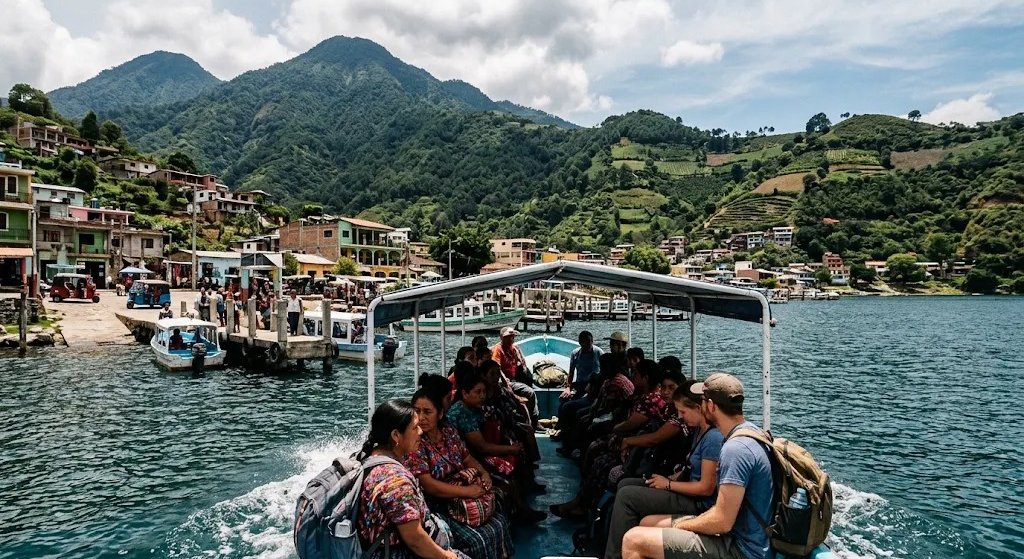
German explorer Alexander von Humboldt famously called Lake Atitlan the most beautiful lake in the world. Formed in an ancient caldera collapse eighty-four thousand years ago, the lake is ringed by three volcanoes and twelve indigenous Maya villages, each with its own distinct atmosphere.
Navigating by Public Wooden Lancha
There is no road encircling the entire shoreline; the primary highway is the lake itself. Small passenger motorboats (lanchas) run every twenty minutes between 6:30 am and 6:00 pm, departing from the docks in the main transport hub of Panajachel. Fares between neighboring villages range from 10 to 25 Quetzales.
Choosing Your Village Base
- Santa Cruz La Laguna: Built into a steep mountain cliff, this peaceful village offers quiet eco-lodges with panoramic volcano views across the lake and excellent hiking trailheads.
- San Marcos La Laguna: The holistic center of the lake, known for yoga shalas, cacao ceremonies, and cliff jumping into deep blue water at the Cerro Tzankujil nature reserve.
- San Pedro La Laguna: The backpacker hub with affordable Spanish language schools, bustling cafes, and the trailhead for climbing the 3,020-meter summit of Volcan San Pedro.
- Santiago Atitlan: The largest Tz'utujil Maya town, famous for traditional woodcarvers, vibrant weaving co-ops, and the shrine of the folk deity Maximom.